
What Great Service Looks Like in a Casual Dining Restaurant
Crooked Goose >> Foodservice>> What Great Service Looks Like in a Casual Dining Restaurant
What Great Service Looks Like in a Casual Dining Restaurant
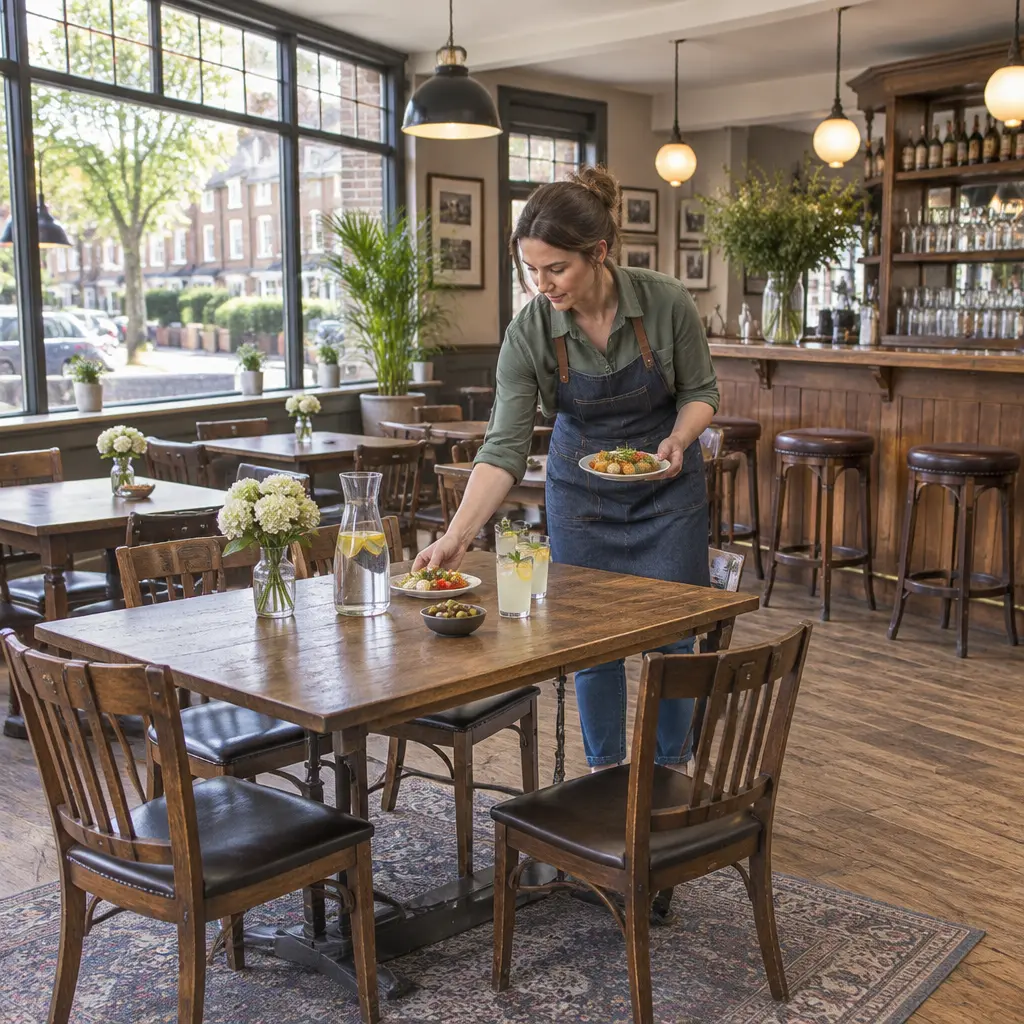
Great service in a casual dining restaurant is the reliable combination of warm hospitality, accurate and timely food service, attentive problem-solving, and a clean, comfortable environment. It is not simply speed or friendliness: it means noticing what guests need, responding without pressure, and making the experience feel easy from arrival to departure. The National Restaurant Association reported that 45% of adults said they were not eating at restaurants as often as they would like in its 2024 research, underscoring why dependable experiences matter to a competitive industry. The practices below explain how service quality is defined, what guests experience at each stage, and how teams can measure and improve it.
Defines Guest-Centered Service as a Core Casual Dining Attribute
Guest-centered service is the coordinated set of employee behaviors and operational practices that help a diner receive the meal and experience they reasonably expect. The National Restaurant Association’s service guidance emphasizes hospitality, accuracy, cleanliness, and responsive execution as foundational elements of restaurant operations. In practical terms, the attribute includes greeting and seating, menu guidance, order accuracy, pacing, issue recovery, payment, and farewell. These related forms of service work together: a friendly greeting cannot compensate for an unsafe dining area, and fast food delivery does not feel successful if the order is wrong.
Warmth and Recognition
Warmth is the respectful, welcoming tone staff use to make guests feel acknowledged without making assumptions or intruding. It can be as simple as making eye contact, offering a genuine greeting, explaining the expected wait, and checking whether a party needs a high chair or accessible seating. Recognition means responding to the guest’s stated preferences—such as a birthday, dietary need, or time constraint—rather than relying on stereotypes. Consistency matters: the same courteous attention should be offered to a family, a solo diner, and a group arriving near closing time.
Accuracy, Knowledge, and Trust
Accurate service means recording and delivering the order as requested, while menu knowledge allows staff to explain ingredients, preparation, portions, substitutions, and potential allergens. The U.S. Food and Drug Administration identifies nine major food allergens, including milk, eggs, fish, crustacean shellfish, tree nuts, peanuts, wheat, soybeans, and sesame. Because allergen mistakes can have serious consequences, employees should never guess: they should consult the restaurant’s documented ingredient and preparation information and communicate the request clearly to the kitchen. Accurate answers build trust; honest uncertainty followed by verification is better service than confident misinformation.
Timeliness and Comfortable Pacing
Timeliness is delivering each part of the meal within a reasonable, clearly communicated period—not rushing guests through dinner. Good pacing includes prompt acknowledgment, timely drink and food delivery, and well-judged check-ins. The appropriate interval depends on party size, menu preparation, kitchen conditions, and guest preferences. When delays occur, staff should update the table before guests have to ask, provide a realistic estimate, and offer an appropriate solution under restaurant policy. Communication cannot eliminate a delay, but it can prevent uncertainty from becoming frustration.
Shows Up Across the Casual Dining Guest Journey
Service quality is experienced as a sequence, so each handoff must support the next. The U.S. Bureau of Labor Statistics’ Consumer Expenditure Surveys track spending on food away from home, reflecting how restaurant dining is a meaningful part of household consumption. Guests therefore judge not just the food but the full interaction surrounding it. A useful way to assess performance is to follow the visit from arrival through the final farewell and identify where clarity, courtesy, or coordination can break down.
Arrival, Waiting, and Seating
The first service stage establishes expectations. A host should acknowledge arriving guests, explain the wait honestly, and keep the quoted time realistic. If a reservation or seating request cannot be met, staff should explain the options rather than leave guests uncertain. Clear directions to the table, accessible routes, and attention to mobility needs make the welcome functional as well as friendly. During busy periods, a brief update is often more reassuring than silence.
Ordering and Dietary Requests
At the table, attentive service gives guests enough time to decide while remaining available for questions. Staff should describe dishes plainly, clarify portion or preparation details when asked, and repeat special instructions accurately. Dietary requests require careful communication between the server and kitchen; a restaurant should explain limitations transparently and avoid promising that a dish is allergen-free unless its procedures support that claim. For guests who want recommendations, useful guidance connects menu knowledge to the guest’s preferences rather than simply promoting the most expensive item.
Food Delivery, Check-Backs, and Meal Pacing
At delivery, the team should confirm that dishes reach the correct guests and that special requests have been followed. A well-timed check-back gives diners an opportunity to report a problem while it can still be corrected. Repeated interruptions, however, can undermine conversation; staff should read the table and remain observant without hovering. Coordination between servers, runners, and kitchen staff is essential, particularly when a party’s dishes are ready at different times or a replacement is needed.
Payment, Farewell, and Accessibility
The close of the visit should be as orderly as the welcome. Staff should provide the check when requested, explain charges if needed, process payment accurately, and thank guests without pressuring them to leave. Accessibility is part of service throughout the visit, not a separate courtesy: the U.S. Department of Justice’s Americans with Disabilities Act guidance addresses accessible routes, seating, and effective communication in public accommodations. Teams should be prepared to offer reasonable assistance while asking guests what works best for them.
Recovers Problems and Protects the Guest Relationship
Service recovery is the process of responding when a guest experiences a mistake, delay, or unmet expectation. It is a core service attribute because even well-run restaurants encounter errors; the guest’s assessment often depends on whether the team takes responsibility and acts promptly. A strong recovery does not begin with an argument about fault. It begins with listening, acknowledging the impact, and agreeing on a practical next step.
Listen, Acknowledge, and Clarify
Employees should let the guest explain the issue, respond calmly, and confirm the problem in neutral language. For example, “I understand that you ordered the sauce on the side and it arrived on the dish” shows the concern has been heard. Staff should avoid blaming another employee, debating the guest’s account, or making promises before checking what can be done. A clear description helps the team select the right remedy and prevents the same error from recurring during the visit.
Resolve Promptly and Follow Through
A useful remedy may be correcting an order, replacing a dish, adjusting the bill according to policy, or providing an accurate update about a delay. The appropriate response depends on the problem, food-safety considerations, and the restaurant’s authority guidelines. Whoever accepts responsibility should communicate the plan and check back to confirm it worked. In an allergen-related concern, the priority is safety and escalation through established procedures—not a quick substitution made without verification.
Learn from Repeated Problems
Recovery data can reveal whether errors stem from unclear modifiers, menu descriptions, staffing gaps, or kitchen handoffs. Managers can review guest feedback alongside voids, remakes, wait times, and incident reports to distinguish a one-time mistake from a recurring process issue. A brief team discussion after a difficult shift can turn a complaint into an operational improvement, provided the aim is learning rather than public blame.
Measures and Improves Service Consistency
Consistent service is service that guests can rely on across different shifts, employees, and levels of business. It requires clear standards, suitable training, adequate staffing, and feedback loops. The National Restaurant Association’s 2024 State of the Restaurant Industry report describes an industry operating amid persistent cost and labor pressures, making practical systems especially important: teams need standards that are achievable during both quiet and peak periods.
Use Observable Service Standards
Standards translate broad values such as hospitality into behaviors a team can practice. Examples include acknowledging guests promptly, repeating modified orders, communicating delays, keeping walkways clear, and checking on a corrected dish. Standards should allow judgment rather than force robotic scripts. Managers can observe service, coach in private, and recognize behaviors that improve the guest experience. A small set of clear priorities is easier to remember than a long checklist that staff cannot apply during a rush.
Train for Skills and Safe Operations
Training should combine menu knowledge, communication, point-of-sale accuracy, food-safety practices, accessibility awareness, and recovery scenarios. The U.S. Bureau of Labor Statistics describes food and beverage serving workers as performing duties that include taking orders, serving food, and preparing checks; effective training connects these tasks so service does not depend on memory alone. Managers should provide refreshers when menus change, review allergen procedures, and ensure employees know when to involve a supervisor.
Track Guest and Operational Indicators
Useful indicators include order accuracy, remake frequency, time from seating to acknowledgment, food-delivery intervals, complaint themes, cleanliness observations, and guest ratings. No single metric captures hospitality, so managers should combine numbers with direct observation and guest comments. A simple dashboard can display these measures by week or shift; a chart comparing order errors and remakes before and after a training change can help show whether an intervention is working. Metrics should support coaching and process improvement, not encourage staff to rush or discourage guests from raising legitimate concerns.
Conclusion: Makes Hospitality Reliable and Memorable
Great casual dining service combines warmth, accuracy, timely pacing, accessibility, and thoughtful recovery. It follows the guest journey from arrival to farewell, while consistent standards and practical measurement help teams deliver those qualities even during busy shifts. Restaurant leaders can strengthen service by reviewing guest feedback, practicing order and allergen communication, clarifying recovery authority, and tracking a few meaningful operational indicators. These actions turn hospitality from a vague aspiration into a dependable part of the meal—and give guests a clear reason to return.
Sources: National Restaurant Association, 2024 State of the Restaurant Industry Report, https://restaurant.org/research-and-media/research/research-reports/state-of-the-restaurant-industry/; National Restaurant Association, Restaurant Operations and Service Resources, https://restaurant.org/; U.S. Food and Drug Administration, Food Allergies, https://www.fda.gov/food/food-labeling-nutrition/food-allergies; U.S. Bureau of Labor Statistics, Consumer Expenditure Surveys, https://www.bls.gov/cex/; U.S. Department of Justice, ADA Requirements: Effective Communication, https://www.ada.gov/resources/effective-communication/; U.S. Bureau of Labor Statistics, Food and Beverage Serving and Related Workers, https://www.bls.gov/ooh/food-preparation-and-serving/food-and-beverage-serving-and-related-workers.htm.
Related Post

American Tavern Menu Ideas Explained A Beginner Guide to Structuring Your Menu
Structuring an American Tavern Menu: Concept and Essentials An American tavern menu is a curated…